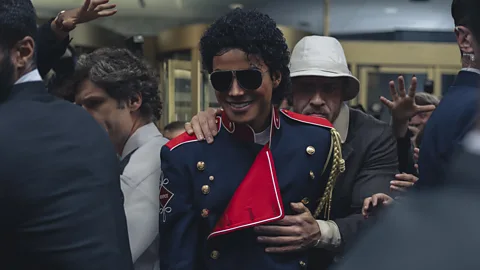
The biographical film Michael offers a compelling and thoughtfully constructed portrayal of Michael Jackson, one of the most influential artists in modern music history. Widely recognized for reshaping pop music, dance, and storytelling, Jackson’s impact extends far beyond his own era.
Even years after his passing, his work continues to reach new audiences, with younger generations discovering his music, style, and cultural influence. The film reflects this lasting legacy, showing how his art not only defined a generation but continues to inspire one.
Rather than showing a retelling of events, the film captures the essence of Michael Jackson’s life through carefully picked moments that reflect both his artistic skills and the immense amount of pressure that accompanied his rise to fame. A key feature of Michael is the attention to his childhood beginning, showing a deeper look at his childhood foundation that formed his music career. From those specific experiences, the film transitions into his emergence as a solo artist, showing the determination he had and the vision that drove him to make his music that would reshape the world.
The film highlights Jackson showing discipline, creativity, and ambition that formed his journey. It explores the process behind his transition into the solo side of music, illustrating how Jackson developed an identity that set him apart and made him the global superstar today. At the same time, the film balances these larger moments with more personal insights, allowing the audience to understand and see both sides of the performer and the person.
A real standout feature of the film is the performance by the nephew of Jackson, Jaafar Jackson, who portrays his uncle with great depth. Taking on such a well-known figure presents a real significant challenge, yet Jaafar avoids exact imitation. His performance shows strong attention to detail in movement and emotion.
What makes his portrayal especially effective is the sense of authenticity he brings to his role. There is a natural connection that enhances both the larger performance scenes and the more subtle, introspective moments. As a result, the character feels like he’s really back in his own film, giving audiences a perspective that is respectful of Jackson’s legacy.
Another important question for Jackson fans is whether Michael is worth experiencing in theaters. Given the film’s emphasis on performance, music, and large-scale production, it really benefits from the cinematic experience. The sound design, choreography, and visual presentation are created to be immersive, making a theater setting the most impactful way to experience the story.
While it may still be enjoyable at home, the energy of the film, especially a live performance scene, is likely to resonate more on the big screen. With early projections suggesting strong box office interest, the film is positioned as a major theatrical watch rather than a casual watch at home.
Overall, Michael succeeds in presenting a meaningful tribute to the themes of ambition, identity, and resilience. It not only reflects on Michael Jackson’s lasting cultural impact but also reinforces how his legacy continues to grow, reaching audiences well beyond his lifetime. Through its careful storytelling and Jaafar Jackson’s performance, the film demonstrates how a legacy can be preserved, expanded, and brought to life for a new generation.