A high school student races to the bathroom as soon as the bell rings. Another student is irritable all class, often talking back and disturbing the class. A third student goes to the bathroom everyday at the same time, likely meeting with another one of their friends. What’s one thing these students have in common? The vape that’s in their pockets.
Vapes are a growing and concerning wave for all students, but specifically HHS students. Nicotine addictions simply alter brain development, affecting your memory, affecting how you retain information and your focus especially in school.
While vaping trends have fluctuated over the years, health experts are now worried about a silent side effect that’s hitting students exactly where it hurts the most: their grades and their ability to learn. For the teenage brain, learning a math formula and learning an addiction look the exact same chemically.
“The biggest misconception is that students will vape to handle the stress of school,” Jennifer Kloeppel, HHS Health Teacher explained. “When you introduce nicotine you’re not relaxing, you are making pathways impossible for focus and memory. Half of the students don’t realize the brain fog nicotine causes.”
To some students, the option to vape is often looked at as a temporary escape from stress, but the biological reality is far more permanent, because the teenage brain is still maturing. Nicotine basically “hijacks” the neuro pathways meant for learning and memory, making it harder to process new information and easier to fall into a cycle of dependency on this habit you created. This habit creates an invisible barrier to success.
Where the very tool meant to provide relief ends up stripping away a student’s ability to focus, plan, and succeed academically.
“It depends on the day, if I’m having a bad day I need to bring it.” They explained “I have to, it’ll get me through the day,” an HHS student who wished to remain anonymous said.
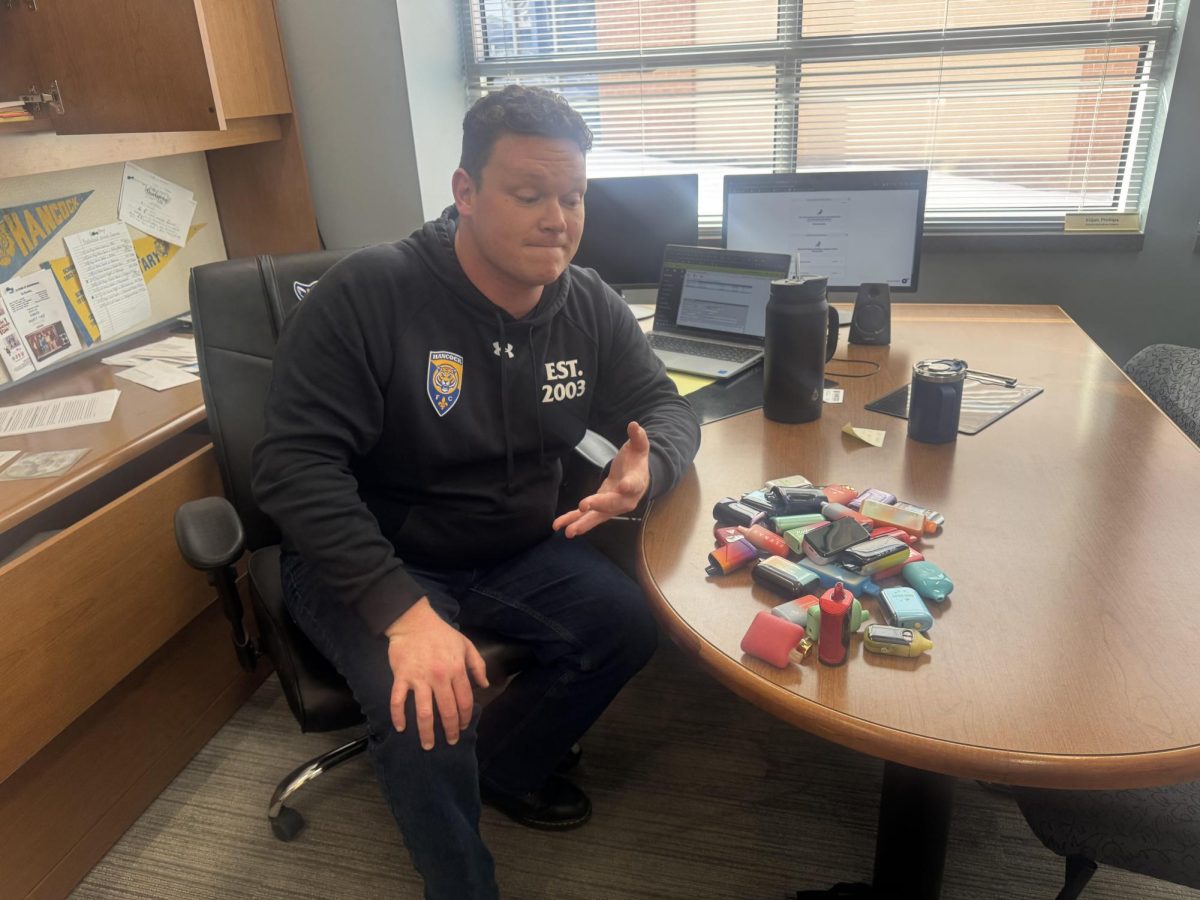
This “need” for a vape to get through the day is the exact cycle Mr. Phillips warns about.
“It’s heartbreaking to see a student’s academic focus replaced by the constant need to leave class,” Mr. Elijah Phillips, HHS Assistant Principal said. “We aren’t just disciplining them for a device, we are trying to reclaim the learning time they are losing to a chemical.”
Which makes me ask and many more students have the same question: Is this a health crisis or should they take disciplinary action?
Kloeppel believes the answer lies somewhere in the middle.
“Do I think they should get suspended? No. Do I think they should get further educated on vaping and what it does? Most definitely. I don’t believe suspending students will educate them on the actual health crisis they’re putting among themselves.”